
India Successfully Test-Launches Agni-1 Short-Range Ballistic Missile from Odisha
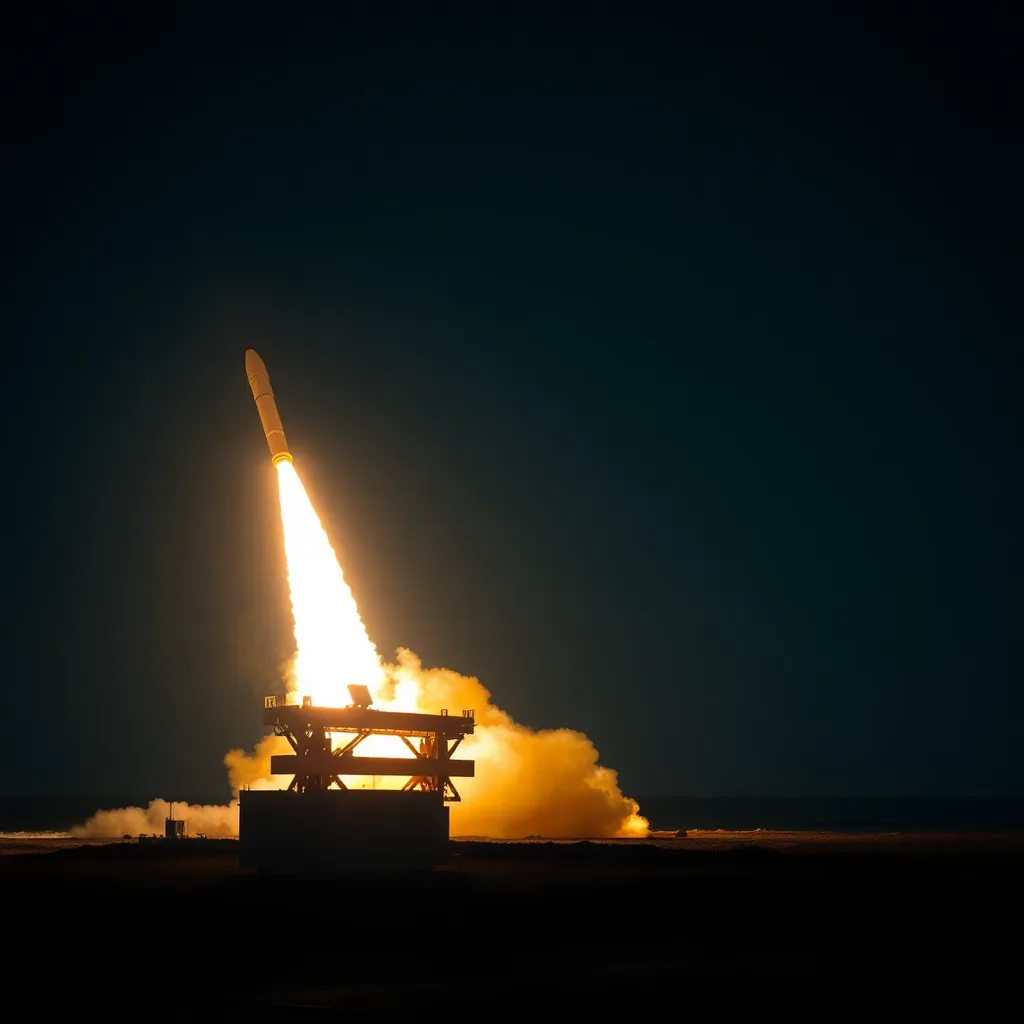
On 22 May 2026, India successfully test-launched the Agni-1 short-range ballistic missile from the Integrated Test Range at Chandipur, Odisha. Conducted under the Strategic Forces Command, the launch validated operational and technical parameters, confirming the missile's readiness and accuracy. Agni-1 is a single-stage, solid-fuel, road-mobile missile with a range of 700-900 km and capable of carrying 1,000 kg payloads, including nuclear warheads. The test reinforces India's credible minimum deterrence capabilities and quick-reaction strike potential in the region.
On this page
Key Facts
- The Agni-1 missile was successfully test-fired on 22 May 2026 from the Integrated Test Range (ITR), Chandipur in Odisha.
- Agni-1 is part of the Agni missile series developed by India's Defence Research and Development Organisation (DRDO) under the Integrated Guided Missile Development Programme.
- It is a single-stage, solid-fuelled, road-mobile short-range ballistic missile with a strike range of 700-900 km.
- The missile can carry a payload of up to 1,000 kg, capable of delivering conventional or nuclear warheads.
- The Strategic Forces Command (SFC), established in 2003, manages and administers India's strategic nuclear arsenal and oversaw the test launch.
- Agni-1 was first inducted into service in 2004; it is a critical component of India's land-based strategic deterrent.
- The launch validated all operational and technical parameters, confirming the missile's accuracy and reliability.
- The Integrated Test Range at Chandipur is a key missile testing facility used for surface-to-surface missile trials.
- The successful test demonstrates the operational readiness of the Strategic Forces Command and India's credible minimum deterrence posture.
Background & Context
India's Agni missile family comprises ballistic missiles with various ranges and payload capacities, designed for both conventional and nuclear missions. Agni-1, the shortest-range missile in the family, provides India with a quick-reaction nuclear and conventional strike capability within a 700-900 km radius, enhancing regional deterrence. Managed by the Strategic Forces Command, India's nuclear weapons command authority, the missile system underpins the country's nuclear doctrine centered on credible minimum deterrence. The Integrated Test Range at Chandipur in Odisha is the primary facility for testing missile systems, ensuring reliability and performance of strategic assets.
Why This Matters for Exams / Exam Relevance
Understanding the Agni-1 missile, its specifications, the role of the Strategic Forces Command, and test facilities like the Integrated Test Range at Chandipur is essential for competitive exams focusing on India’s defense capabilities, nuclear strategy, and missile technology. Questions often cover India's missile programs, ranges and payloads of strategic missiles, and the organizational structure managing these weapons. This launch exemplifies India's ongoing advancement in strategic deterrence technology and verifies factual knowledge needed for understating India’s defense preparedness.
Points to Remember
- Agni-1 is a single-stage, solid-fuel, road-mobile short-range ballistic missile with a 700-900 km range.
- The missile carries a 1,000 kg payload, deployable with either conventional or nuclear warheads.
- It was successfully test-fired from Chandipur’s Integrated Test Range on 22 May 2026 under the Strategic Forces Command.
- The Strategic Forces Command, established in 2003, controls and administers India's strategic nuclear arsenal.
- The Integrated Test Range at Chandipur is India's principal missile testing site.
- Agni-1 contributes to India’s credible minimum deterrence and quick reaction strike capability.
- This test affirmed the missile’s operational readiness and technical reliability.
Sources & Further Reading
| Document / Website | Link |
|---|---|
| India test fires Agni-1 missile from Odisha | Open India test fires Agni-1 missile from Odisha ↗www.gktoday.in |
| Agni-1 missile test: India validates accuracy, readiness in Odisha launch - India Today | Open Agni-1 missile test: India validates accuracy, readiness in Odisha launch - India Today ↗www.indiatoday.in |
| Strategic Forces Command - Wikipedia | Open Strategic Forces Command - Wikipedia ↗en.wikipedia.org |
| Integrated Test Range (ITR) Chandipur - Ministry of Defence Releases | Open Integrated Test Range (ITR) Chandipur - Ministry of Defence Releases ↗pib.gov.in |