
Largest Pavona clavus Coral Colony Documented Near Kadmat Island, Lakshadweep
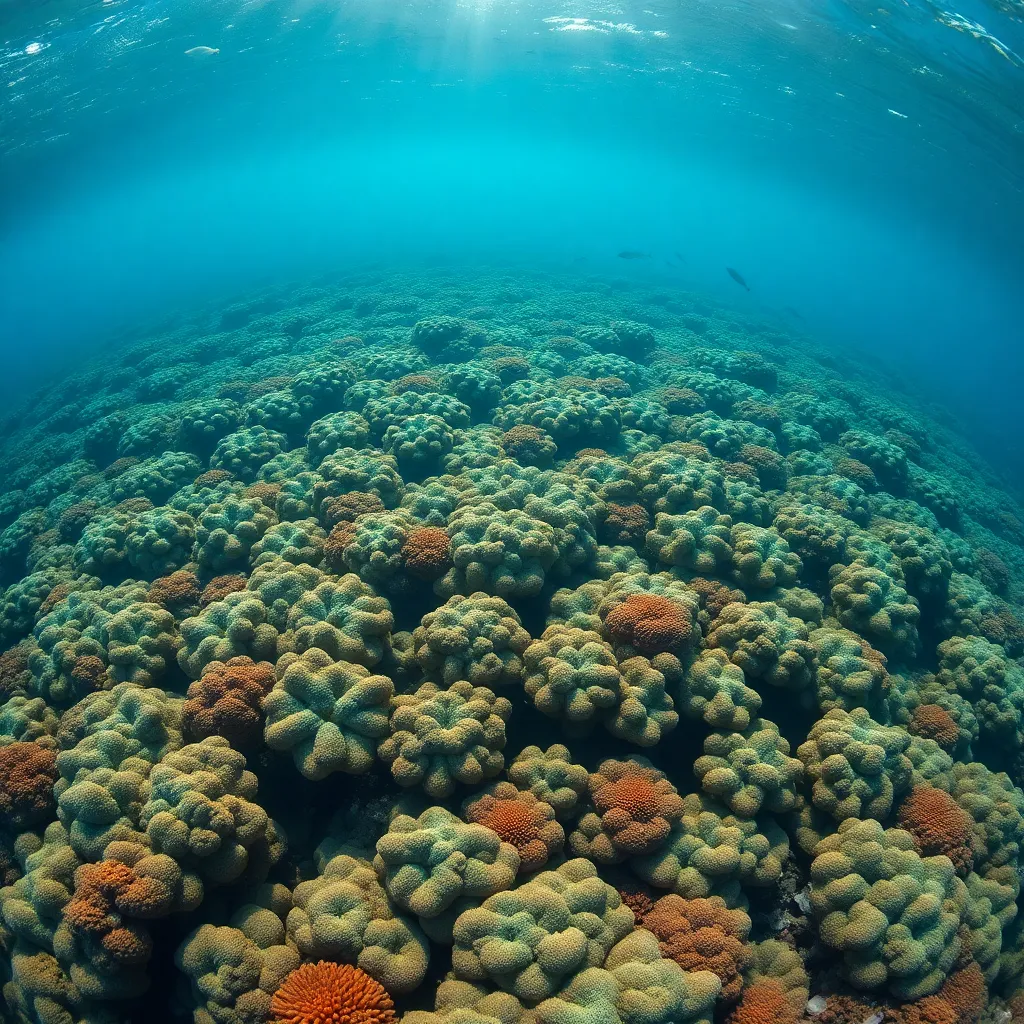
Scientists have discovered a massive Pavona clavus coral colony, locally called the “Potato Patch”, near Kadmat Island in Lakshadweep. Covering approximately 4,250 square metres—about half the size of an international football field—this colony is one of the world's largest known living coral formations of its species. Preliminary growth estimates suggest an age between 700 and 1,800 years, making it potentially one of the oldest living coral structures in the region. Despite environmental challenges like marine heatwaves and bleaching, around 58.47% of the colony's coral tissue remains alive. This discovery offers significant insights into coral longevity, resilience, and climate adaptation in the Indian Ocean.
On this page
Key Facts
- Location: Southeastern waters off Kadmat Island, Lakshadweep Archipelago
- Species: Pavona clavus (Potato coral)
- Size: Approximately 4,250 square metres
- Estimated Age: 700 to 1,800 years (preliminary estimate requiring scientific dating)
- Live coral coverage in colony: 58.47%
- Depth range: Starts at 5.2 metres on reef flat and extends down to about 20 metres on steep slope
- Documentation year: 2026
- Organisations involved: Department of Science and Technology (Government of India), Research and Environmental Education Foundation, The Habitat Trust
Background & Context
Lakshadweep is India’s only coral atoll chain in the Arabian Sea, comprising coral atolls, reefs, and lagoons, supporting rich marine biodiversity. Kadmat Island is one of the inhabited islands with significant reef ecosystems. Pavona clavus is a stony coral species that builds calcium carbonate skeletons, forming reef structures. Coral reefs worldwide are vulnerable to climate change impacts such as coral bleaching, which occurs when corals lose their symbiotic algae called zooxanthellae due to stress from factors like elevated sea temperatures.
Why This Matters for Exams / Exam Relevance
This discovery underscores India’s unique marine biodiversity and highlights the importance of coral reef conservation in Lakshadweep. Understanding species like Pavona clavus, coral longevity, and reef health is vital for topics in marine ecology, environmental science, and biodiversity conservation commonly covered in competitive exams in India. Key facts such as location, size, and conservation significance are important to remember.
Points to Remember
- The “Potato Patch” is the local name for the Pavona clavus coral colony near Kadmat Island.
- The colony covers about 4,250 square metres, roughly half the size of an international football pitch.
- The estimated age ranges between 700 and 1,800 years but requires scientific dating methods like radiometric dating for confirmation.
- 58.47% of the coral tissue in the colony is alive, indicating a relatively healthy reef despite environmental stress.
- Lakshadweep is India’s only coral atoll chain located in the Arabian Sea, comprising multiple islands and reefs.
- The discovery was made during a marine biodiversity survey involving the Department of Science and Technology, REEF, and The Habitat Trust in 2026.
Sources & Further Reading
| Document / Website | Link |
|---|---|
| Lakshadweep Potato Patch Coral Colony Identified | Open Lakshadweep Potato Patch Coral Colony Identified ↗www.gktoday.in |
| Newly recorded Lakshadweep ‘Potato Patch’ coral could be one of the world’s largest living colonies | Open Newly recorded Lakshadweep ‘Potato Patch’ coral could be one of the world’s largest living colonies ↗www.downtoearth.org.in |