
Major Conservation Success: Coringa Sanctuary Protects 20,000 Olive Ridley Turtle Eggs
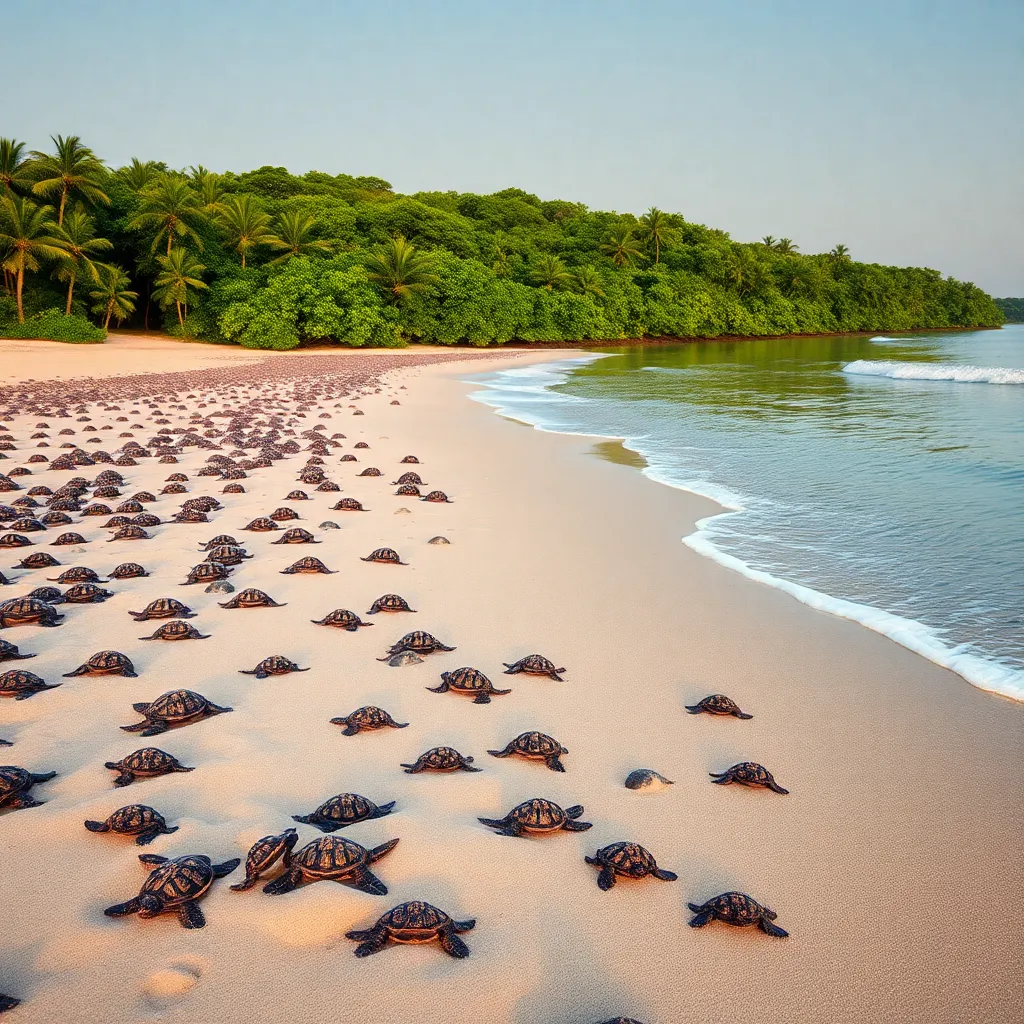
The Coringa Wildlife Sanctuary in Andhra Pradesh recently conserved nearly 20,000 Olive Ridley turtle eggs on Hope Island, underscoring critical marine conservation efforts. The sanctuary, located at the Godavari estuary, hosts India's second-largest mangrove forest and supports a diverse range of flora and fauna, including endangered species such as the smooth-coated otter. Olive Ridley turtles are famous for their mass nesting event called 'Arribada,' where thousands of females come ashore simultaneously to lay eggs. Classified as Vulnerable by the IUCN and protected under Schedule I of India's Wildlife Protection Act, these turtles depend on healthy coastal ecosystems like Coringa's mangroves, which also serve as natural buffers against coastal erosion and climate change impacts. The protection of these eggs highlights the importance of safeguarding coastal wetlands for maintaining biodiversity and ecological balance.
On this page
Key Facts
Coringa Wildlife Sanctuary is located in Andhra Pradesh within the Godavari River estuary where the Coringa River meets the Bay of Bengal.
It hosts the second-largest stretch of mangrove forests in India, comprising species such as Rhizophora, Avicennia, and Sonneratia.
Coringa Wildlife Sanctuary was established in 1978 to protect its rich biodiversity, including extensive mangrove ecosystems and tropical dry deciduous forests.
The sanctuary supports endangered mammals like the smooth-coated otter and fishing cat, and is an important habitat for bird species such as the black-capped kingfisher, Brahminy kite, gulls, and sandpipers.
The coastal region of Coringa serves as a crucial breeding ground for Olive Ridley turtles, known for their unusual mass nesting phenomenon called 'Arribada,' where thousands of females arrive simultaneously to lay eggs.
Recently, officials conserved nearly 20,000 Olive Ridley turtle eggs on Hope Island, emphasizing ongoing conservation efforts.
The Olive Ridley turtle is distributed across warm waters of the Pacific, Atlantic, and Indian Oceans.
According to the IUCN, the Olive Ridley turtle is classified as Vulnerable and is listed under Schedule I of the Wildlife Protection Act, 1972, affording it the highest level of legal protection in India.
Background & Context
Coringa Wildlife Sanctuary is a vital estuarine ecosystem in Andhra Pradesh, playing a key role in maintaining coastal biodiversity and ecological integrity. Its large mangrove forests not only provide habitat for numerous species but also help shield coastal areas from erosion and the impacts of climate change. Olive Ridley turtles, which undertake remarkable mass nesting events known as Arribada, rely on beaches like those at Coringa for reproductive success. Conservation authorities' recent successful protection of 20,000 turtle eggs on nearby Hope Island serves as a testament to focused efforts to safeguard vulnerable marine species and their habitats.
Why This Matters for Exams / Exam Relevance
For competitive examinations in India, especially those focused on environment, biodiversity, wildlife conservation, and geography, the Coringa Wildlife Sanctuary represents an important case study. Understanding its location, biodiversity importance, and key conservation efforts such as protecting Olive Ridley turtle eggs helps candidates grasp India's ecosystem diversity and the legislative frameworks protecting wildlife. The phenomenon of 'Arribada' is a notable biological event frequently asked about due to its uniqueness. Additionally, the sanctuary's role in supporting mangrove ecosystems ties into broader topics on climate resilience and environmental protection.
Points to Remember
Coringa Wildlife Sanctuary is situated at the Godavari estuary in Andhra Pradesh and was established in 1978.
It contains India's second-largest mangrove forest, crucial for biodiversity and coastal protection.
The sanctuary is home to endangered species such as the smooth-coated otter, fishing cat, and various bird species.
Olive Ridley turtles use the sanctuary's coastal regions, including Hope Island, for breeding and nesting.
'Arribada' is the mass nesting phenomenon where thousands of female Olive Ridley turtles come ashore simultaneously to lay eggs.
Nearly 20,000 Olive Ridley turtle eggs were conserved recently in the sanctuary area, reflecting active conservation measures.
The Olive Ridley turtle is classified as Vulnerable by the IUCN and enjoys highest protection status under Schedule I of the Wildlife Protection Act, 1972.
Mangrove forests play a vital role in supporting biodiversity and protecting coastal regions from erosion and climate impacts.
Sources & Further Reading
| Document / Website | Link |
|---|---|
| Coringa Sanctuary protects Olive Ridley turtle eggs | Open Coringa Sanctuary protects Olive Ridley turtle eggs ↗www.gktoday.in |