
Mesalina bishnoi: New Lizard Species Discovered in Rajasthan, First Record of Genus in India
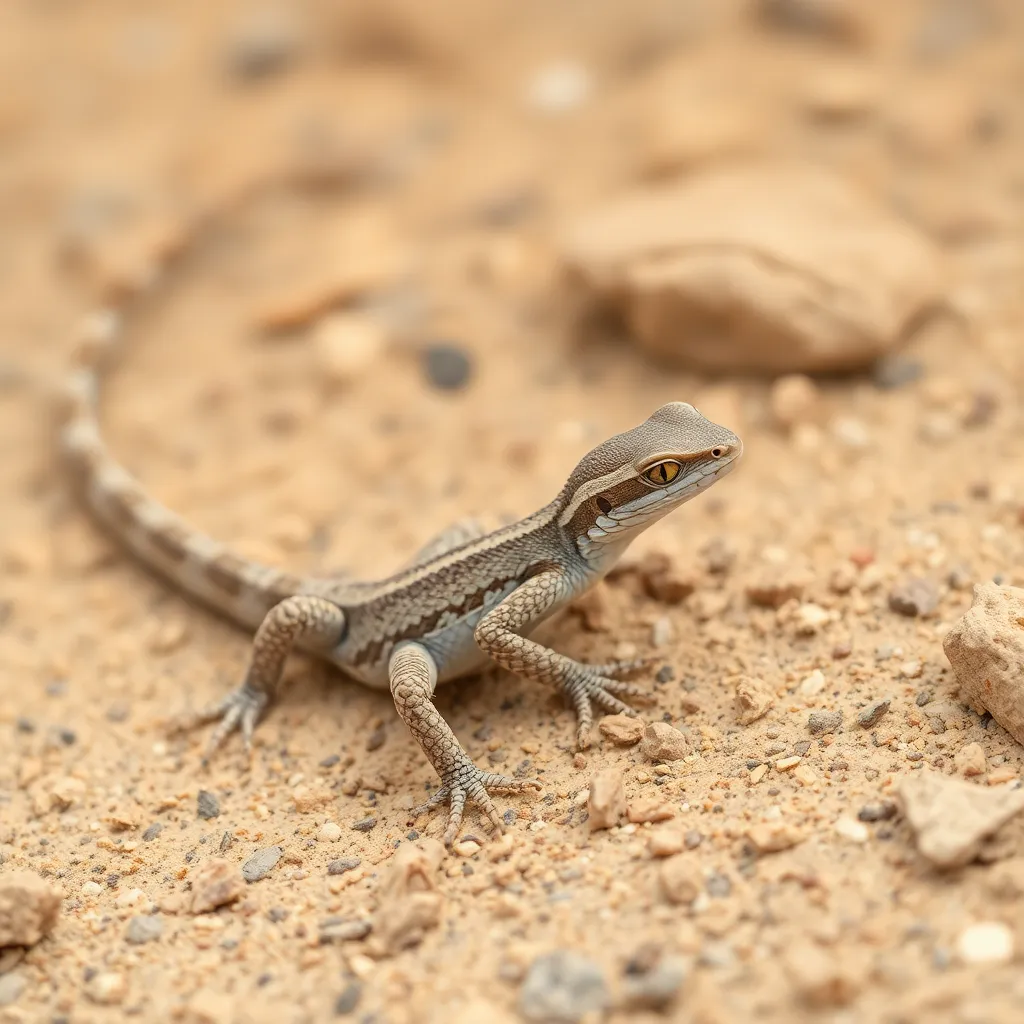
Mesalina bishnoi is a newly described lizard species formally published on 1 June 2026 following its discovery near Gajner in the Bikaner district of Rajasthan. This is the first confirmed record of the genus Mesalina in India, bridging a 90-year gap since a mention by zoologist Malcolm A. Smith in 1935 without specimen confirmation. The specimen was collected in August 2025 from an open semi-desert habitat of the Thar desert region. The lizard is small-bodied (~39.2 mm snout-vent length) with greyish to olive-brown coloration and distinctive stripes. The species name honors the Bishnoi community, known nationally for their steadfast wildlife and environmental conservation traditions.
On this page
Key Facts
- Scientific name: Mesalina bishnoi
- Discovery: Specimen collected August 2025 near Gajner, Bikaner district, Rajasthan
- Formal Description Published: 1 June 2026
- Genus: Mesalina; Family: Lacertidae
- Habitat: Open semi-desert environment within the Thar desert
- Size: Approximately 39.2 mm snout-vent length
- Body coloration: Greyish to olive-brown with two distinct stripes from neck to tail and dark markings behind the eyes, plus white spots among dark spots
- Species named after the Bishnoi community, acknowledged for their conservation efforts
- Historical context: Although referenced near Jaisalmer in 1935 by Malcolm A. Smith, this is the first physical specimen confirmation of Mesalina in India
Background & Context
The genus Mesalina includes small diurnal lacertid lizards inhabiting arid and semi-arid zones from North Africa to northwestern India, with the Thar Desert in Rajasthan providing a typical habitat. Despite earlier mentions in literature, Mesalina had not been confirmed with specimens in India until the discovery of M. bishnoi. The Bishnoi community, native to western Rajasthan, has a centuries-old legacy of environmental stewardship, wildlife protection, and sustainable resource management, which the naming of this species honors as a tribute to their ecological contributions.
Why This Matters for Exams
This discovery is important for topics like Indian biodiversity, taxonomy, desert ecology, and conservation history relevant in competitive examinations. It exemplifies recent additions to Indian fauna and highlights the role of traditional communities in wildlife protection. Questions may delve into new species discoveries in India, the biogeography of desert reptiles, the significance of the Bishnoi community in conservation, and historical zoological studies in Rajasthan.
Points to Remember
- Mesalina bishnoi was found in August 2025 near Gajner in Bikaner, Rajasthan.
- The species was formally described and published on 1 June 2026.
- This represents the first confirmed record of the genus Mesalina in India.
- The species is named after the Bishnoi community, known for their wildlife conservation ethos.
- It belongs to the family Lacertidae, common in Old World arid zones.
- Although Malcolm A. Smith mentioned Mesalina watsonana near Jaisalmer in 1935, there was no specimen-based confirmation until now.
Sources & Further Reading
| Document / Website | Link |
|---|---|
| Mesalina bishnoi recorded in India for first time | Open Mesalina bishnoi recorded in India for first time ↗www.gktoday.in |
| New lizard species Mesalina Bishnoi discovered at tea stall Bikaner Rajasthan | Open New lizard species Mesalina Bishnoi discovered at tea stall Bikaner Rajasthan ↗navbharattimes.indiatimes.com |
| Systematics of the Mesalina guttulata species complex (Squamata: Lacertidae) from Arabia with the description of two new species | Open Systematics of the Mesalina guttulata species complex (Squamata: Lacertidae) from Arabia with the description of two new species ↗pubmed.ncbi.nlm.nih.gov |
| The Bishnoi: Revisiting Religious Environmentalism and Traditional Forest and Wildlife Management in the Thar Desert | Open The Bishnoi: Revisiting Religious Environmentalism and Traditional Forest and Wildlife Management in the Thar Desert ↗www.environmentandsociety.org |