
Meghalaya's Lakadong Turmeric Receives Geographical Indication Status in 2024
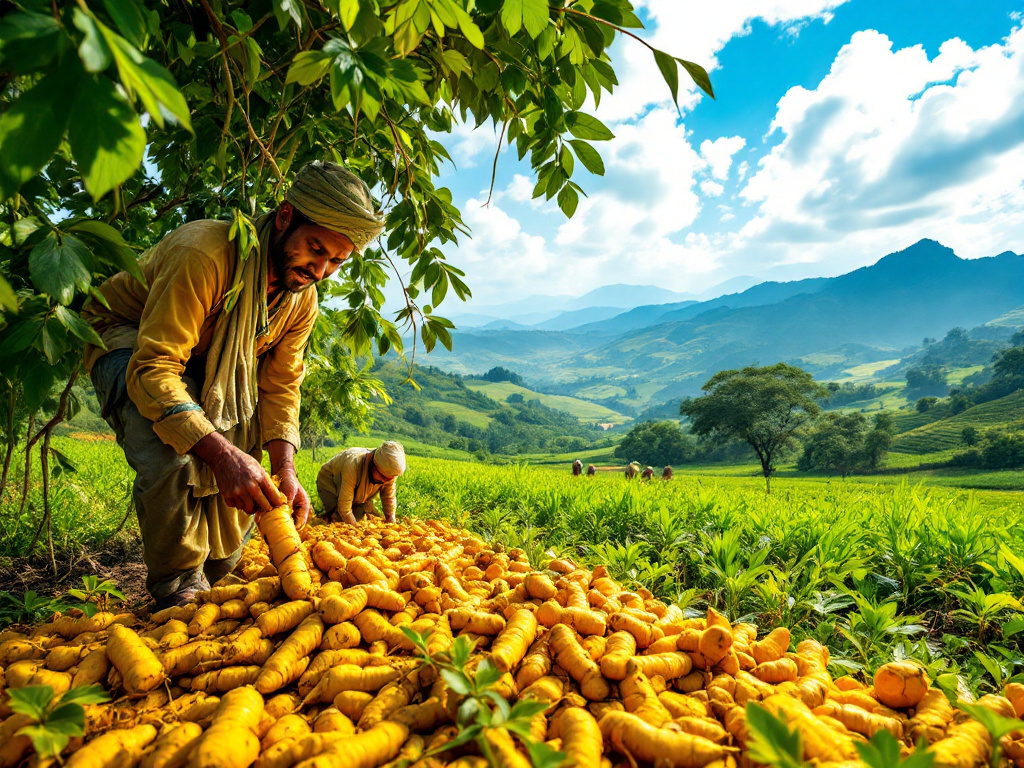
Lakadong Turmeric, a prized turmeric variety from the Jaintia Hills of Meghalaya, received the Geographical Indication (GI) status in 2024. Distinguished by its exceptionally high curcumin content of 7% to 12%, it surpasses many commercial turmeric varieties that contain only 2% to 3%. This organic turmeric is cultivated traditionally by around 14,000 farmers in 43 villages. The GI tag protects the uniqueness linked to its geographical origin, promotes local farming, and prevents counterfeit products. The turmeric's global recognition was highlighted at the 52nd G7 Summit in France, aligning with India's target of achieving USD 1 billion in turmeric exports by 2030.
On this page
Key Facts
- Lakadong Turmeric is grown primarily in the Jaintia Hills, Meghalaya.
- Received GI status on 30 March 2024, valid till 14 February 2031.
- Curcumin content ranges between 7% to 12%, significantly higher than other turmeric varieties (typically 2% to 3%).
- Approximately 14,000 farmers cultivate it across 43 villages using traditional organic farming methods without chemical fertilizers.
- GI tag awarded by the Geographical Indications Registry, Chennai, certifies product uniqueness and protects against counterfeiting.
- The North East's largest organic spice processing unit was inaugurated in Bhoirymbong, Ri-Bhoi district, Meghalaya on 19 June 2026 for processing Lakadong Turmeric.
- Lakadong Turmeric was showcased among Indian products at the 52nd G7 Summit in Évian, France.
- India aims to reach USD 1 billion in turmeric exports by 2030, with Lakadong Turmeric as a flagship product.
Background & Context
Lakadong Turmeric, locally called "Shynrai Lakadong" or "Chyrmit Lakadong" among Khasi and Pnar communities, is indigenous to Meghalaya's Jaintia Hills. Its cultivation follows traditional, organic farming practices in mineral-rich, high-altitude soil, without chemical use, contributing to its high curcumin content and distinct taste and color. Curcumin is the principal bioactive compound responsible for turmeric's health benefits, including anti-inflammatory and antioxidant effects, and Lakadong's high curcumin levels (7%-12%) are well above conventional turmeric varieties.
The GI tag awarded in March 2024 helps protect this unique heritage product, ensuring only turmeric grown in the Jaintia Hills can be marketed as "Lakadong Turmeric." This safeguards farmers’ livelihoods, encourages value addition locally, and helps prevent counterfeit or diluted products.
Why This Matters for Exams / Exam Relevance
Lakadong Turmeric is a key example of geographical indications in India, illustrating the government's initiatives to protect indigenous agricultural products, promote organic farming, and boost exports. It is relevant for topics on:
- Geographical Indications (GI) and their significance.
- Indian regional agricultural specialties and their socio-economic impact.
- India’s export policies and targets in spices.
- The role of sustainable and organic farming in rural livelihoods.
- Importance of Northeast India's contributions to agriculture and economy.
Points to Remember
- GI status granted on 30 March 2024, valid until 14 February 2031.
- Produced exclusively in Jaintia Hills, Meghalaya.
- Curcumin content of 7% to 12%, markedly higher than general turmeric (2%-3%).
- Cultivated by ~14,000 farmers across 43 villages using traditional organic methods.
- The North East's largest organic spice processing facility inaugurated in June 2026 in Ri-Bhoi district.
- Recognized internationally at the 52nd G7 Summit showcasing Indian products.
- Part of India’s push to reach USD 1 billion turmeric exports by 2030.
Sources & Further Reading
| Document / Website | Link |
|---|---|
| Lakadong Turmeric Gains Global Recognition - GKToday | Open Lakadong Turmeric Gains Global Recognition - GKToday ↗www.gktoday.in |
| Lakadong turmeric - Wikipedia | Open Lakadong turmeric - Wikipedia ↗en.wikipedia.org |
| Action Plan for Development of Value Chain of Lakadong Turmeric in Meghalaya - MoFPI | Open Action Plan for Development of Value Chain of Lakadong Turmeric in Meghalaya - MoFPI ↗www.mofpi.gov.in |