
Understanding Rule 267 of Rajya Sabha: Procedure for Urgent Discussion
Rule 267 of the Rules of Procedure and Conduct of Business in the Rajya Sabha allows members to request suspension of scheduled business to discuss urgent matters of national importance, subject to the Chairman's approval. The Rajya Sabha Chairman is the Vice-President of India ex-officio, who decides on admitting such notices. The rule is invoked rarely; the last accepted debate before 2026 was in November 2016 on demonetisation. Opposition members, including Leader Mallikarjun Kharge, submitted notices under Rule 267 on 22-23 July 2026 concerning the NEET-UG 2026 paper leak and related protests. Understanding Rule 267 is critical for exam aspirants focusing on parliamentary procedures and Indian polity.
On this page
Key Facts
- Rule 267 is a provision in the Rules of Procedure and Conduct of Business in the Rajya Sabha (Council of States) in India.
- It allows a member of the Rajya Sabha to move a motion to suspend the day's scheduled business for discussion of an urgent matter of national importance.
- The suspension of business under Rule 267 requires the Chairman's approval; the Chairman is the Vice-President of India ex-officio.
- Notices under Rule 267 must be in the prescribed form and are subject to the Chairman's discretion to admit or reject.
- Rule 267 does not confer an automatic right to discussion; it is used rarely and only on 'rarest of rare' occasions.
- The last accepted use of Rule 267 before 2026 was in November 2016, during the chairmanship of Md. Hamid Ansari, for discussion on demonetisation.
- On 22 and 23 July 2026, Opposition members, including Leader of Opposition Mallikarjun Kharge, submitted multiple notices under Rule 267 seeking discussion on the NEET-UG 2026 paper leak, systemic examination crises, and police action on student protesters.
- Rule 176 is an alternate procedural rule in Rajya Sabha used for short-duration discussions that do not suspend the day’s entire agenda.
Background & Context
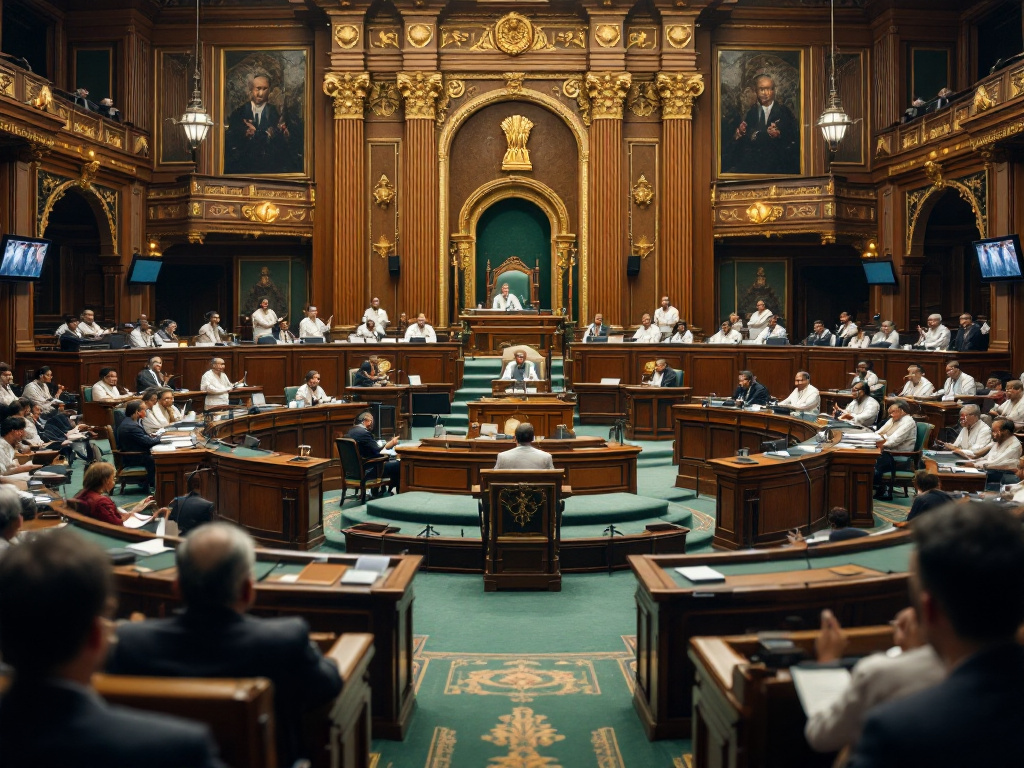
The Rajya Sabha is the Upper House of the Indian Parliament, with business governed by specific procedural rules. Rule 267 serves as a tool by which members can interrupt normal business to address urgent public issues that require immediate attention. The Chairman of the Rajya Sabha, who is the Vice-President of India ex-officio, holds the authority to admit or reject notices under this rule, ensuring procedural propriety and restricting its use to exceptional circumstances.
The necessity for such a rule arises from the need to balance routine legislative business with the provision for timely discussion on emergent and nationally significant matters. The infrequent use of Rule 267 signifies its exceptional and discretionary nature, not a routine mechanism.
Why This Matters for Exams / Exam Relevance
For students and aspirants appearing in competitive exams like the UPSC and state public service exams, knowledge of Rule 267 enhances understanding of parliamentary procedures, the functioning of the Rajya Sabha, and the role of its Chairman. It illustrates how urgent matters of national importance can interrupt scheduled parliamentary business, reflecting the flexibility and checks within parliamentary operations. Questions regarding parliamentary procedures and key recent parliamentary events often feature in current affairs and polity sections of exams.
Points to Remember
- The Rajya Sabha Chairman is the Vice-President of India ex-officio.
- Rule 267 requires the Chairman's permission to suspend the day's business for urgent discussion.
- Notices must be properly submitted and can be rejected at the Chairman's discretion.
- Rule 267 is distinct from Rule 176, which allows short-duration discussions without suspending the entire day’s agenda.
- Opposition Leader Mallikarjun Kharge and other MPs submitted multiple notices under Rule 267 on 22-23 July 2026 regarding NEET-UG paper leak, protests, and examination system crises.
- The last major accepted discussion under Rule 267 before 2026 was on demonetisation in November 2016 during Md. Hamid Ansari's chairmanship.
- Deputy Chairman Harivansh Narayan Singh characterized the use of Rule 267 as occurring on 'rarest of rare' occasions.
Sources & Further Reading
| Document / Website | Link |
|---|---|
| What is Rule 267 in Rajya Sabha? | Open What is Rule 267 in Rajya Sabha? ↗www.gktoday.in |
| Rules of Procedure and Conduct of Business in Rajya Sabha | Open Rules of Procedure and Conduct of Business in Rajya Sabha ↗rajyasabha.nic.in |
| Role of Rajya Sabha Chairman | Open Role of Rajya Sabha Chairman ↗www.nationalportal.gov.in |