
Rajasthan Constitutes Committee to Draft Uniform Civil Code, 2026
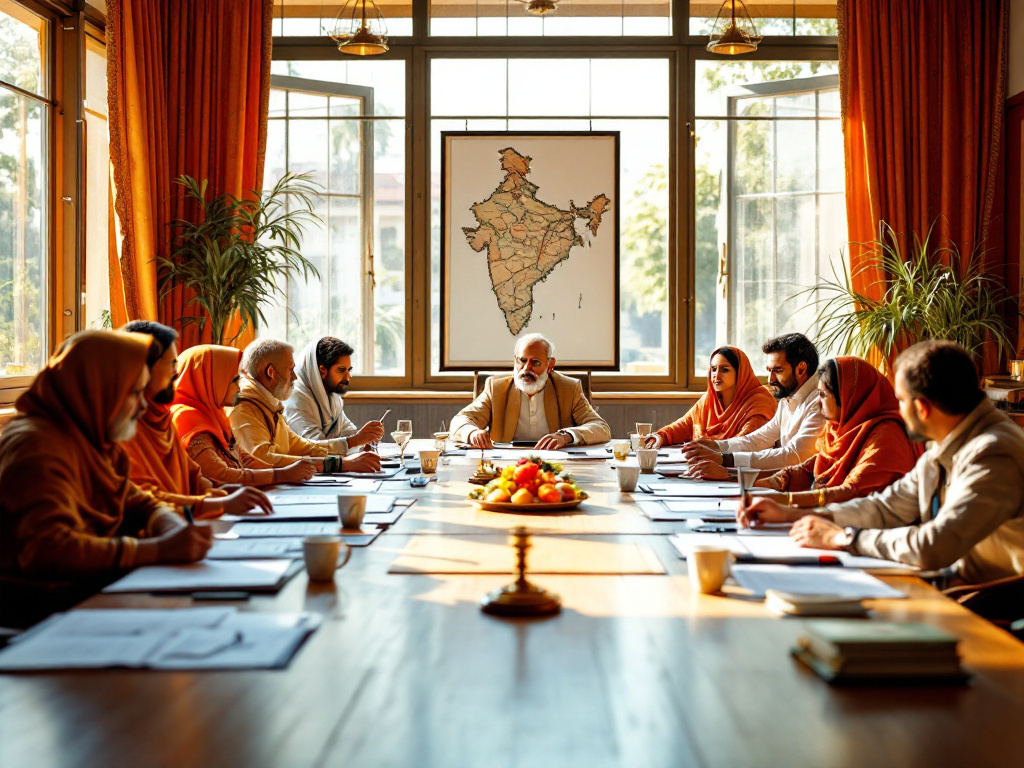
On June 22, 2026, the Rajasthan government formed a high-level committee to draft the Rajasthan Uniform Civil Code (UCC), aiming to unify civil laws across religions covering marriage, divorce, inheritance, adoption, and maintenance. The draft seeks to replace personal laws with a common legal framework for all citizens, with protections for tribal customs. Proposals include mandatory marriage and divorce registration, banning polygamy, registration of live-in relationships, and equal inheritance rights for sons and daughters. The committee will hold divisional-level public consultations and invite suggestions online, aligning with Article 44 of the Indian Constitution, which directs states to strive for a Uniform Civil Code.
On this page
Key Facts
- Date of Announcement: June 22, 2026
- Committee Chairperson: Justice Ranjana Prakash Desai (former Supreme Court judge)
- Committee Members: Retired IAS officer Shatrughna Singh, Rajasthan High Court Additional Advocate General Basant Singh Chhaba, former Principal Ramswaroop Agarwal, and Dr. Shuchi Chauhan
- Additional Chief Secretary (Home): Member-Secretary of the committee
- Key Provisions Proposed: Mandatory registration of marriages and divorces, ban on polygamy, mandatory registration of live-in relationships, and equal inheritance rights for sons and daughters
- Consultation Process: Divisional-level public consultations and an online platform for citizen suggestions
- Protection: Customs, traditions, and rights of tribal communities protected under constitutional provisions such as the Fifth and Sixth Schedules
- Constitutional Basis: Article 44 of the Indian Constitution under Directive Principles of State Policy
Background & Context
The Uniform Civil Code (UCC) is a proposed legal framework intended to unify personal laws applicable to all Indian citizens irrespective of religion, covering civil matters like marriage, divorce, inheritance, adoption, and maintenance. Currently, personal laws in India vary based on religion, causing disparities especially in women's rights. Article 44 of the Constitution places the UCC in the Directive Principles of State Policy, encouraging states to legislate uniform laws to promote national unity and equality.
Rajasthan’s initiative to form this committee follows examples from other states such as Goa (which has the Goa Civil Code since independence), Uttarakhand, Gujarat, and Assam which have enacted variants of UCC legislation recently.
Why This Matters for Exams / Exam Relevance
This topic is significant for various competitive exams (state and national levels) involving Indian polity, governance, and law. Important facts include the date of committee formation, the chairperson's identity, the committee members, and the progressive legal proposals addressing gender equality and social reform within civil laws. The alignment with constitutional directives like Article 44 makes it a key governance and constitutional law topic.
Points to Remember
- The Rajasthan government constituted a five-member expert committee on June 22, 2026, headed by Justice Ranjana Prakash Desai.
- The draft UCC aims to unify laws governing marriage, divorce, inheritance, adoption, and maintenance for all religions.
- Proposed reforms include banning polygamy, mandatory registration of marriage and divorce, mandatory registration of live-in relationships, and equal inheritance rights for sons and daughters.
- Customs and rights of scheduled tribes are protected as per constitutional safeguards.
- The committee will carry out public consultations divisional-wise and collect feedback through an online platform to ensure inclusivity.
- Article 44 of the Indian Constitution under the Directive Principles provides the constitutional mandate for the UCC.
- States such as Goa, Uttarakhand, Gujarat, and Assam have already taken steps towards implementing the UCC.
Sources & Further Reading
| Document / Website | Link |
|---|---|
| Rajasthan Moves Towards Uniform Civil Code | Open Rajasthan Moves Towards Uniform Civil Code ↗www.newkerala.com |
| Rajasthan UCC Bill: Equal Inheritance, Polygamy Banned | UCC Moves Ahead | Open Rajasthan UCC Bill: Equal Inheritance, Polygamy Banned | UCC Moves Ahead ↗www.bhaskarenglish.in |
| Uniform Civil Code: Constitutional Provisions and Debates | Open Uniform Civil Code: Constitutional Provisions and Debates ↗www.understandupsc.com |
| Uniform Civil Code - Wikipedia | Open Uniform Civil Code - Wikipedia ↗en.wikipedia.org |