
West Bengal to Introduce Uniform Civil Code Bill in 2026 Assembly Session
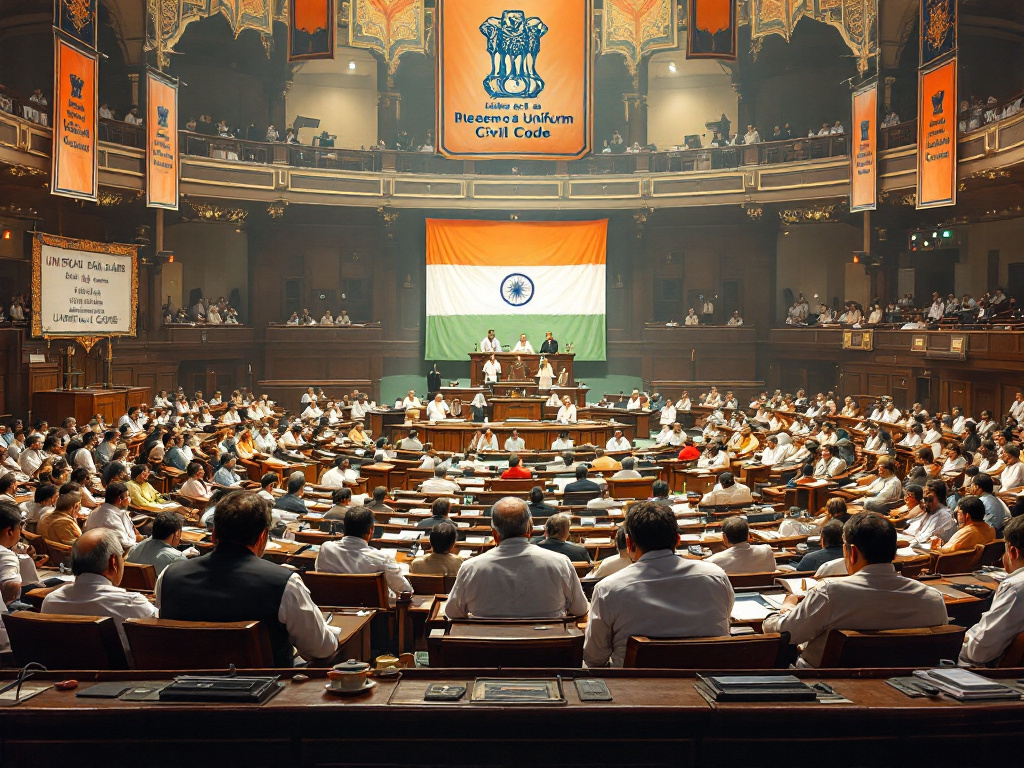
West Bengal is set to become the fourth Indian state to introduce a Uniform Civil Code (UCC) Bill in its assembly in the budget session starting June 29, 2026. The bill aims to establish a common civil law governing marriage, divorce, inheritance, and adoption applicable to all citizens regardless of religion. Building on precedents set by Uttarakhand, Gujarat, and Assam, the proposed legislation includes provisions such as banning polygamy, invalidating child marriages, and mandating live-in relationship registration. The move aligns with Article 44 of the Indian Constitution, under the Directive Principles of State Policy, which encourages a uniform civil code for the nation. The BJP government, led by Chief Minister Suvendu Adhikari, has made UCC implementation a key electoral promise, although it faces opposition from the Trinamool Congress and other groups in the state.
On this page
Key Facts
- West Bengal plans to table the Uniform Civil Code Bill on June 29, 2026, during the budget session.
- The UCC will propose common civil laws on marriage, divorce, inheritance, and adoption for all citizens, irrespective of religion.
- West Bengal would be the fourth state to adopt a UCC after Uttarakhand, Gujarat, and Assam.
- Key provisions reportedly include a ban on polygamy, invalidation of child marriages, and mandatory registration of live-in relationships.
- The BJP government, led by Chief Minister Suvendu Adhikari, aims to fulfill its manifesto promise to implement UCC within six months of taking office.
- The Trinamool Congress (TMC) and Mamata Banerjee have opposed the UCC in West Bengal.
Background & Context
Article 44 of the Indian Constitution mandates the State to endeavor to secure a Uniform Civil Code for its citizens as part of the Directive Principles of State Policy, although it is not enforceable as a fundamental law. Currently, personal laws in India govern marriage, divorce, succession, and adoption differently across various religious communities.
Uttarakhand became the first state to implement a UCC in January 2025, followed by Gujarat and Assam introducing similar bills. West Bengal, characterized by a diverse religious demographic including a significant Muslim population, plans to join these states by introducing the UCC Bill. The BJP government argues that UCC would promote legal uniformity and gender equality, while opposition parties highlight concerns over religious freedom and community identity.
Why This Matters for Exams / Exam Relevance
The tabling of the UCC Bill in West Bengal is a significant current affairs event with direct connections to constitutional provisions (Article 44), state legislative procedure, and the ongoing socio-political discourse on personal laws in India. It offers material relevant for polity, governance, and current affairs sections in competitive examinations.
Points to Remember
- Date of introduction: June 29, 2026
- States with UCC interventions: Uttarakhand, Gujarat, Assam, and West Bengal (forthcoming)
- Constitutional provision: Article 44 (Directive Principles of State Policy)
- West Bengal Chief Minister: Suvendu Adhikari
- Principal opposition: Trinamool Congress (TMC)
- Important provisions in the draft Bill: ban on polygamy, invalidation of child marriages, mandatory registration of live-in relationships
Sources & Further Reading
| Document / Website | Link |
|---|---|
| West Bengal set to table Uniform Civil Code Bill: Here's what the proposed law could change - The Week | Open West Bengal set to table Uniform Civil Code Bill: Here's what the proposed law could change - The Week ↗www.theweek.in |
| Bengal government to table Uniform Civil Code Bill in Assembly on Monday - India Today | Open Bengal government to table Uniform Civil Code Bill in Assembly on Monday - India Today ↗www.indiatoday.in |
| Article 44: Uniform Civil Code for the citizens - Constitution of India | Open Article 44: Uniform Civil Code for the citizens - Constitution of India ↗www.constitutionofindia.net |
| Uttarakhand becomes first state to implement Uniform Civil Code | DD News | Open Uttarakhand becomes first state to implement Uniform Civil Code | DD News ↗ddnews.gov.in |