
Hindustani Classical Music: Instruments, Forms and Gharanas
Hindustani classical music is a major tradition of Indian classical music mainly practiced in North India. Originating around the 14th century, its roots trace back to the ancient Natya Shastra and Vedic chants with influences from Persian, Arab, and Afghan cultures. This system is characterized by improvisation and the raga framework, focusing on melodic and rhythmic structures. Major vocal forms include Dhrupad, Khayal, Tarana, and Thumri, supported by instruments like sitar, tabla, sarangi, and santoor. The musical knowledge is traditionally transmitted through the guru-shishya parampara, preserving distinct gharanas or stylistic schools.
On this page
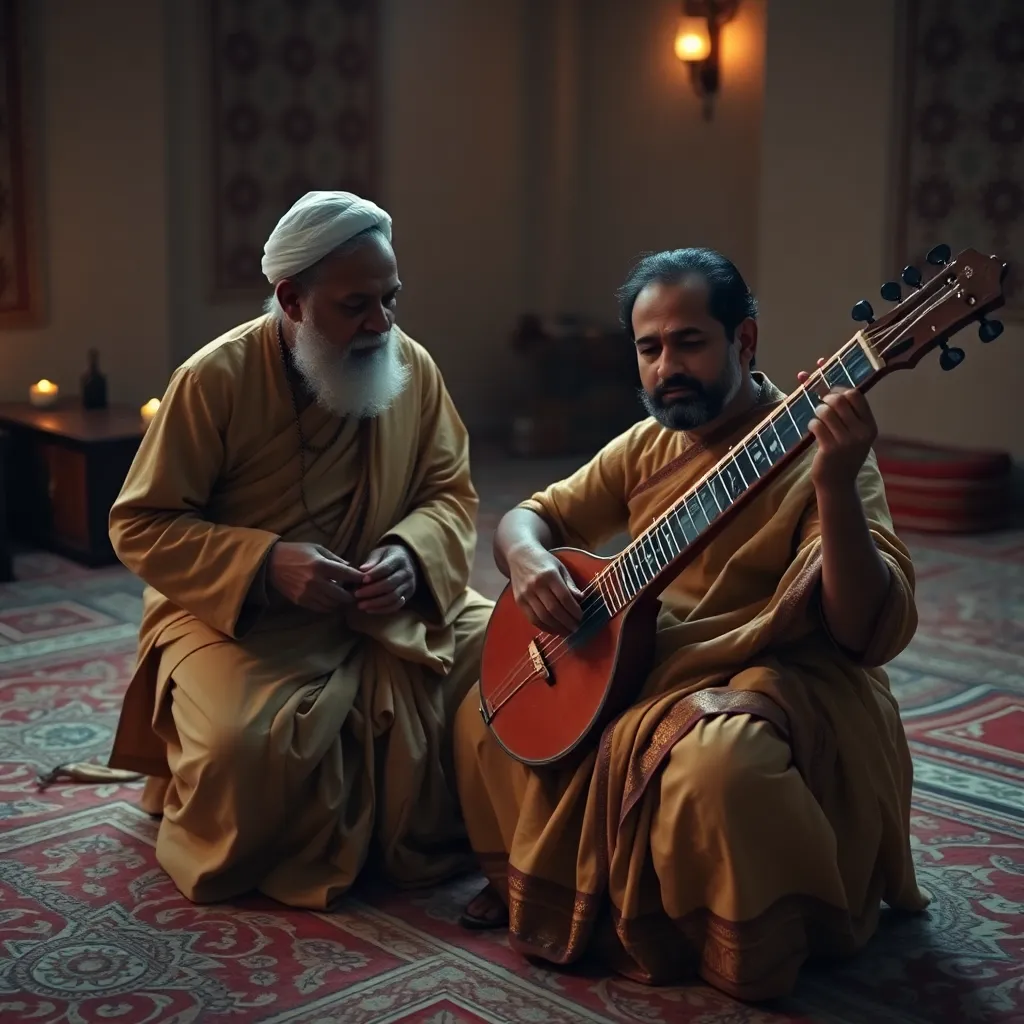
Hindustani classical music: key facts
- Hindustani classical music is one of the two main traditions of Indian classical music, practiced predominantly in North India, while Carnatic music is practiced mainly in South India.
- The tradition evolved around the 13th-14th century, diverging from ancient Indian music traditions recorded in Bharata's Natya Shastra and the Sangita Ratnakara.
- Hindustani music integrates elements of ancient Hindu tradition, Vedic philosophy, and Persian, Islamic cultural influences.
- It is based on a system of ragas (melodic frameworks) and talas (rhythmic cycles), emphasizing improvisation within these frameworks.
- The main musical instruments used include Tabla (percussion), Sitar, Sarangi (bowed string), Santoor, Flute, and Violin.
- Vocal music is central to Hindustani music, with major vocal forms such as Dhrupad, Khayal, Tarana, Thumri, Dadra, and Ghazal.
- Musical knowledge and style are transmitted traditionally through the guru-shishya parampara (teacher-disciple lineage).
- Various gharanas (musical schools or lineages) like Gwalior, Kirana, Patiala, Agra, and Jaipur-Atrauli represent distinct stylistic and pedagogical traditions.
Background & Context
Hindustani classical music gradually diverged from Carnatic music around the 13th century, influenced heavily by Persian and Islamic culture due to the Islamic conquests and the Mughal Empire in North India. This fusion introduced new elements including instruments like Tabla and Sitar, and enriched the musical vocabulary with Sufi and Persian melodic and poetic forms.
The music features a melodic scale based on seven notes (Shuddha Swaras) and additional microtones, and uses ragas as melodic frameworks characterized by specific note sequences and emotive moods.
Historically, prominent musicians such as Amir Khusrau and Tansen were instrumental in developing and systematizing Hindustani music. Dhrupad, one of the earliest forms, flourished in the courts of Mughal emperors like Akbar.
The gharana system emerged as a means to preserve distinctive performance styles and compositions, transmitted through generations within families or through discipleship.
Why This Matters for Exams / Exam Relevance
Hindustani classical music is an important part of India's intangible cultural heritage and is frequently featured in exams on Indian culture, music, and art history. Understanding its origin, evolution, major musical forms, instruments, and gharanas is essential for comprehensive cultural literacy.
Exam questions may test knowledge on differences between Hindustani and Carnatic traditions, the historical influences on Hindustani music, key vocal styles, and the significance of the guru-shishya parampara and gharanas.
Points to Remember
- Hindustani music is distinct from Carnatic through its Persian and Islamic influences and its emphasis on improvisation.
- Major vocal styles include the ancient and austere Dhrupad and the more improvisational Khayal, among others.
- Gharanas represent stylistic schools maintaining unique musical interpretations and teaching lineages.
- Tabla and Sitar are signature instruments introduced or developed through historical cultural synthesis.
- Guru-shishya parampara remains vital for the transmission of musical knowledge.
Hindustani classical music instruments
Instruments used in Hindustani music include the tabla, sitar, sarangi, santoor, flute and violin. The tabla supplies rhythm, while melodic instruments interpret ragas. Instrumental music shares the raga and tala framework used by vocal performers.
Continue your preparation
Sources & Further Reading
| Document / Website | Link |
|---|---|
| Hindustani music - Drishti IAS | Open Hindustani music - Drishti IAS ↗www.drishtiias.com |
| Hindustani classical music | Origins, Instruments, & Styles | Britannica | Open Hindustani classical music | Origins, Instruments, & Styles | Britannica ↗www.britannica.com |