
Rouble Nagi's Educational Initiative for Marginalized Communities
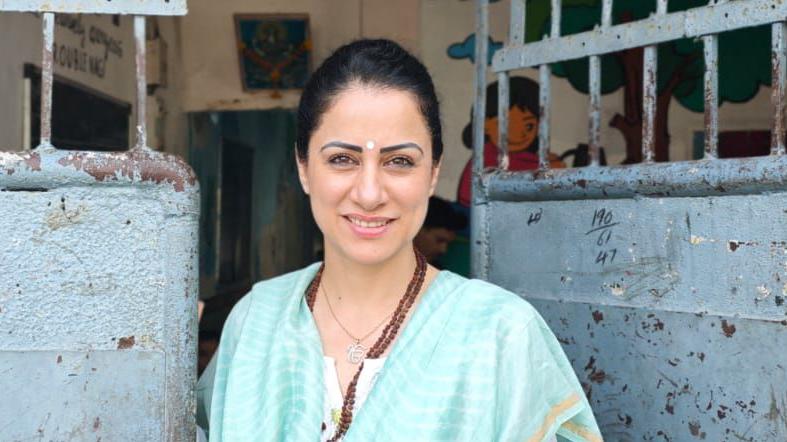
Rouble Nagi, an artist and educator from Mumbai, has transformed marginalized slum communities by establishing over 800 learning centres through her nonprofit, the Rouble Nagi Art Foundation. These centres provide free education using art-based methods, reaching children who lack access to formal schooling or have dropped out. Her approach includes open-air classrooms and active community involvement. In recognition of her exceptional contributions, she was awarded the Global Teacher Prize, highlighting her impact on improving education in underserved Indian communities.
On this page
Key Facts
Rouble Nagi is the founder of the Rouble Nagi Art Foundation (RNAF), which has established more than 800 learning centres across over 100 underserved communities and villages in India.
The centres provide free lessons in basic math and language skills, employing art-based learning methods to make education engaging and accessible.
Nagi was awarded the Global Teacher Prize, a $1 million award recognizing exceptional contributions to teaching, selected from over 5,000 nominees worldwide.
Learning spaces vary, including formal classrooms as well as open-air setups in slums where children sit on mats or carpets.
The foundation enlists volunteers to offer skill-based lessons and provides necessary school supplies such as books and bags.
Mural projects under the foundation, including the 'Misaal' initiative, paint educational topics like science, hygiene, environmental awareness, and social responsibility on slum walls.
Challenges include working with children from dysfunctional families; teachers often act as counselors and protectors, with volunteers tracking attendance through home visits.
Nagi actively involves parents through regular sessions to maintain engagement with their children's education.
Background & Context
Rouble Nagi's journey began roughly three decades ago in Mumbai's Colaba area, a community characterized by narrow lanes and shanties inhabited mainly by washermen and their families. An encounter with a boy from a slum, who could not afford schooling, inspired Nagi to bring education to marginalised children. She started by decorating slum walls with murals and telling stories, attracting children to learning opportunities they had not previously accessed.
Over the years, Nagi expanded this vision, establishing over 800 learning centres that use art-based methods to simplify complex concepts and nurture children's curiosity and academic skills. These centres are part of a holistic community approach, recognizing that learning can happen anywhere and must be made interesting to engage students effectively.
The foundation's work also extends beyond education to building trust and relationships within communities through direct support such as providing provisions during difficult times and offering emotional support. Former students, like Mayur, now contribute back by teaching and volunteering, indicating the sustainable community impact of the programme.
Why This Matters for Exams / Exam Relevance
This case study is important for understanding innovative educational interventions aimed at social inclusion and equity, especially relevant in discussions of:
Community-based and non-formal education approaches;
Use of arts as a pedagogical tool to enhance learning in marginalized communities;
The multifaceted role of educators encompassing teaching, counseling, and community engagement;
Alternative learning environments outside traditional classrooms;
Educational initiatives aligned with Sustainable Development Goals (specifically SDG 4: Quality Education).
Points to Remember
Rouble Nagi's RNAF operates extensively with over 800 learning centres targeting children's education in underserved Indian communities.
Art-based learning is central to simplifying concepts and making learning attractive and relatable.
Learning settings are flexible, from formal classrooms to open air spaces within slums, reflecting adaptability to local contexts.
The programme emphasizes family and community involvement alongside educational activities to enhance student retention and well-being.
The 'Misaal' project uses educational murals as a tool to promote awareness of various important social and scientific topics.
Receiving the Global Teacher Prize highlights the global recognition and importance of grassroots educational innovations like those led by Nagi.
Sources & Further Reading
| Document / Website | Link |
|---|---|
| Mumbai artist wins Global Teacher Prize for transforming education in slums | Open Mumbai artist wins Global Teacher Prize for transforming education in slums ↗www.bbc.com |