
Sulphur: Uses, Distribution in India, and Impact of West Asia Conflict
Sulphur is a vital non-metallic element essential in various industries, predominantly for producing sulphuric acid, which is crucial in fertilizer manufacturing, ore processing, and chemical synthesis. It naturally occurs as a yellow crystalline solid and is the thirteenth most abundant element in the earth's crust. In India, sulphur is found in native deposits across regions including Leh (Jammu & Kashmir), Andhra Pradesh, Kerala, and Himachal Pradesh, with Odisha leading production at 25% in 2022-23. The ongoing West Asia conflict disrupts approximately 35% of the global sulphur supply, adversely affecting India's industrial and agricultural sectors dependent on imported fertilizers, underscoring sulphur's strategic economic importance.
On this page
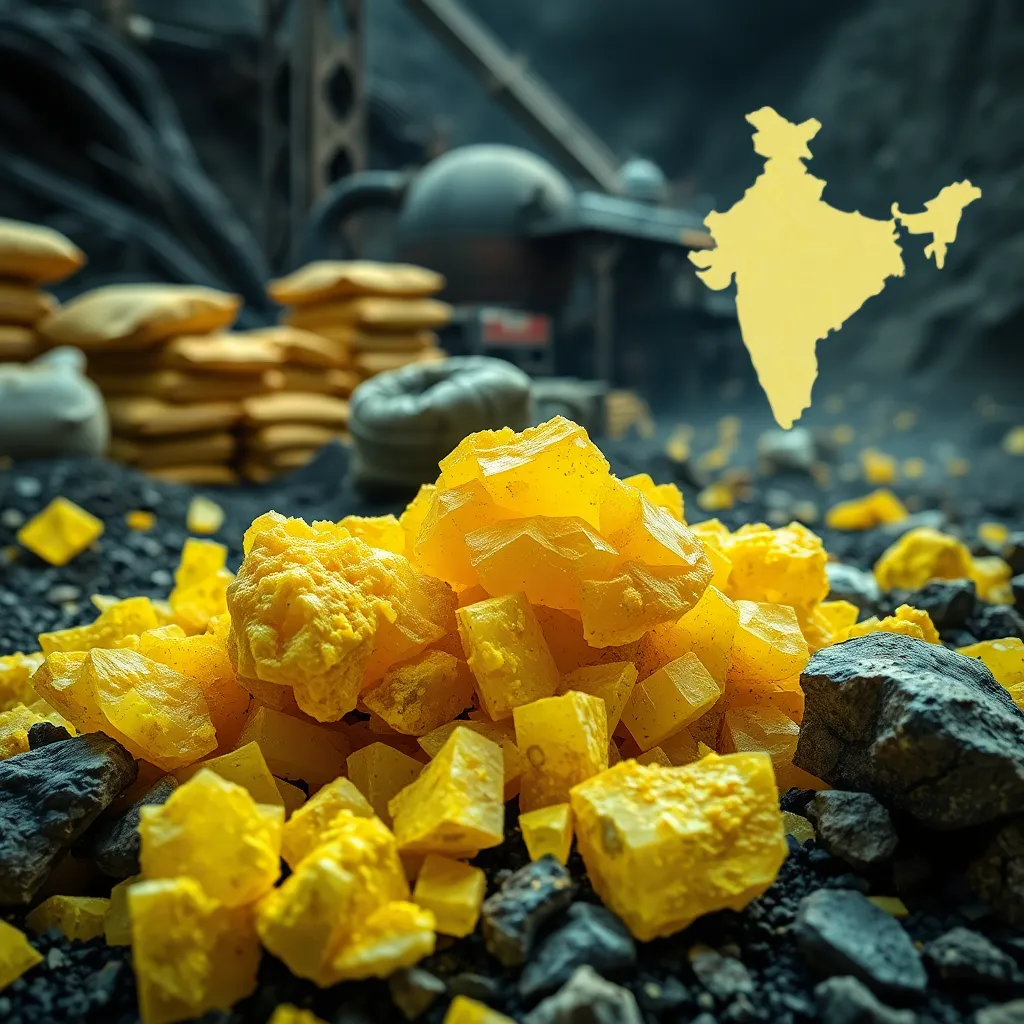
Key Facts
Sulphur (chemical symbol S) is a yellow crystalline non-metallic element and ranks as the 13th most abundant element in the Earth's crust.
It combines directly with almost all elements except gold, platinum, and the noble gases.
In India, native sulphur deposits are reported notably in the Puga Valley of Leh district (Jammu & Kashmir) with grades ranging from 9% to 24% sulphur; small occurrences exist in Barren Island (Bay of Bengal), Garhwal and Kumaun divisions (Uttarakhand), coastal areas of Krishna and East Godavari districts (Andhra Pradesh), Alappuzha district (Kerala), and Kangra district (Himachal Pradesh).
According to Indian Minerals Yearbook 2023, Odisha accounted for 25% of total sulphur production in 2022-23, followed by Kerala (20%), Haryana (17%), Gujarat (16%), West Bengal (9%), Uttar Pradesh (6%), Maharashtra (5%), with remaining production from Bihar and Assam.
Most elemental sulphur production in India is a by-product from petroleum refineries and fuel oil used for fertilizer manufacturing rather than from mining native deposits.
Sulphur's principal industrial use is in the production of sulphuric acid, which is produced in greater quantities than any chemical except water; it is vital in ore processing (copper, nickel, cobalt), fertilizer manufacturing (especially phosphatic fertilizers), oil refining, wastewater processing, and chemical synthesis.
Powdered sulphur (containing up to 30% amorphous allotrope) is used in rubber vulcanisation, agricultural dusts, pharmaceuticals, and stock feeds.
Sulphur lamps use sulphur plasma excited by microwave radiation to produce efficient, full-spectrum, electrodeless lighting.
Sulphur compounds find applications in detergents, fungicides, dyes, agrichemicals, and photography (sodium and ammonium thiosulphate as fixing agents).
Sulphites, derived from burning sulphur, bleach paper pulp and act as preservatives in dried and processed fruits.
Sulphur enhances crop nutrition by improving protein and oil content in seeds, cereal quality for milling and baking, marketability of copra, tobacco leaf quality, and the nutritive value of forage crops.
Sulphur-based concrete is an eco-efficient alternative to Portland cement used for paving stones, sidewalks, and building foundations.
About 35% of globally traded sulphur originates from West Asia; geopolitical tensions and conflicts there disrupt supply chains, impacting industries including steel, aluminium, textiles, beverages, and fertilizer-dependent agriculture sectors in India.
Background & Context
Sulphur is an essential element in the global economy due to its widespread use in chemical industries and agriculture. The strategic importance of sulphur and its derivative, sulphuric acid, lies not only in industrial applications but also in maintaining agricultural productivity via fertilizer manufacture. India possesses native sulphur deposits, but domestic production is limited and primarily derived from byproduct recovery in the oil and gas refineries. Consequently, India remains reliant on imports—especially from West Asia—for raw sulphur and sulphuric acid supplies. Ongoing conflicts in West Asia, including those involving Iran and disruptions at critical chokepoints like the Strait of Hormuz, pose risks to this supply chain, leading to increased input costs and potential shortages. These factors have significant implications for India's industrial growth and food security, as fertilizer availability directly affects crop yields and agricultural sustainability.
Why This Matters for Exams / Exam Relevance
Understanding sulphur’s chemical properties, distribution in India, and its multifaceted industrial and agricultural uses is vital for UPSC aspirants. The element connects crucial themes across the syllabus, including mineral resources, industrial development indicators (such as sulphuric acid production), environmental chemistry, and current affairs relating to geopolitical influences on resources and food security. The impact of West Asian conflicts on sulphur supply chains exemplifies the intersection of geography, economics, and international relations, topics frequently examined in prelims and mains papers.
Points to Remember
Sulphur combines directly with all elements except noble metals like gold and platinum, and noble gases.
Native sulphur deposits in India occur in specific regions such as Leh (J&K), Andhra Pradesh, Kerala, Himachal Pradesh, and Uttarakhand, but large-scale production is mainly from byproducts of petroleum refining.
Sulphuric acid production and consumption serve as a key indicator of a nation’s industrial development.
Around 35% of global sulphur trade originates from West Asia, making supply vulnerable to geopolitical instability.
The West Asia conflict and potential closures of strategic transport routes disrupt sulphur and fertilizer supplies, impacting Indian agriculture and food security.
Major Indian sulphur-producing states (2022-23) include Odisha, Kerala, Haryana, Gujarat, West Bengal, Uttar Pradesh, Maharashtra, Bihar, and Assam.
Sources & Further Reading
| Document / Website | Link |
|---|---|
| Knowledge Nugget | Understanding Sulphur: what it is and more | Open Knowledge Nugget | Understanding Sulphur: what it is and more ↗indianexpress.com |