
Joint Parliamentary Committee Supports One Nation, One Election Framework
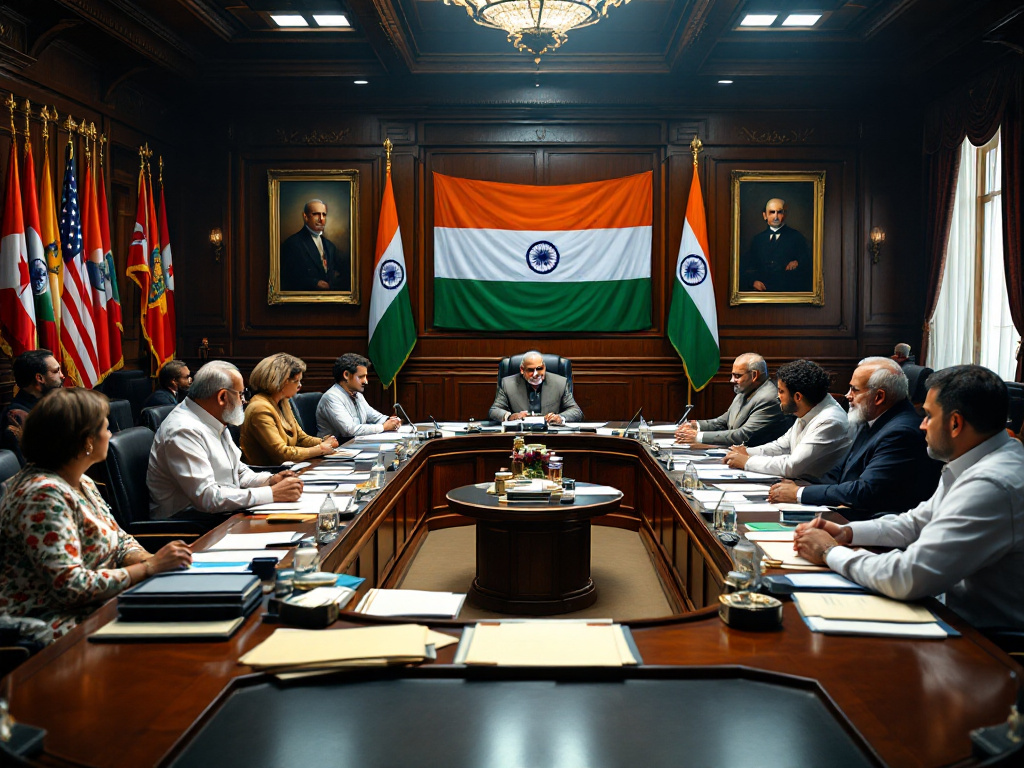
On 11 July 2026, the 41-member Joint Parliamentary Committee (JPC) chaired by BJP MP P.P. Chaudhary endorsed the One Nation, One Election (ONOE) proposal, confirming its constitutional validity. The JPC analyzed the Constitution (129th Amendment) Bill, 2024, aimed at synchronizing elections for the Lok Sabha and State Legislative Assemblies. The committee's extensive consultations with legal experts, including six former Chief Justices, and civil society revealed nearly 99% support for simultaneous elections. Economists estimate economic benefits of approx. Rs 7 lakh crore from reduced election disruptions and smoother governance. The framework aligns with the federal structure and democratic principles in the Indian Constitution and may be implemented by the 2029 general election.
On this page
Key Facts
- One Nation, One Election (ONOE) proposes synchronized elections to the Lok Sabha (lower house of Parliament) and State Legislative Assemblies.
- The Constitution (129th Amendment) Bill, 2024 was introduced in Lok Sabha on 17 December 2024 and referred to the Joint Parliamentary Committee on 19 December 2024.
- The 41-member Joint Parliamentary Committee (JPC) is chaired by BJP MP P.P. Chaudhary.
- The JPC held approximately 16 meetings, including at Parliament House Annexe and various states (Goa, Maharashtra, Uttarakhand, Punjab, Himachal Pradesh, Haryana, Karnataka, Gujarat).
- The committee consulted six former Chief Justices of India and legal experts, who confirmed that the ONOE proposal conforms with the Constitution of India.
- About 99% of consulted civil society stakeholders supported simultaneous elections.
- Economists estimated that synchronizing Lok Sabha and Assembly elections could add nearly Rs 7 lakh crore to the economy, due to reduced election disruptions and smoother governance.
- The JPC indicated that the One Nation, One Election framework could be implemented by the 2029 general election.
Background & Context
India follows a federal system under its Constitution, with legislative and executive powers shared between the Union and the States. Currently, elections for the Lok Sabha and State Assemblies occur asynchronously, leading to frequent polls and associated challenges in governance and administration.
The One Nation, One Election proposal seeks to align electoral cycles for the Lok Sabha and State Legislative Assemblies so that elections are held simultaneously on a fixed schedule, reducing administrative burden, election expenditure, and governance disruptions caused by staggered elections.
The Constitution (129th Amendment) Bill, 2024 is the legislative measure introduced to provide the necessary constitutional amendments to enable this synchronization of polls. Constitutional amendment bills in India require special majority approval in Parliament under Article 368.
Why This Matters for Exams / Exam Relevance
The ONOE proposal is significant for Indian polity and governance subjects in competitive exams, as it touches upon key constitutional provisions and parliamentary procedures.
- Article 79 establishes the Lok Sabha as the lower house of Parliament.
- Part VI of the Constitution delineates the structure and functions of State Legislatures.
- Article 368 provides the procedure for constitutional amendments.
- The Joint Parliamentary Committee is a parliamentary mechanism convened to scrutinize bills in detail, exemplifying legislative processes.
Understanding these elements, along with the economic and political implications of election synchronization, provides a comprehensive view relevant to exams on Indian polity.
Points to Remember
- Chairperson of Joint Parliamentary Committee: P.P. Chaudhary (BJP MP).
- Constitution (129th Amendment) Bill, 2024 introduced on 17 December 2024.
- JPC report submitted on 11 July 2026.
- One Nation, One Election aims to synchronize Lok Sabha and State Assembly elections under a fixed schedule.
- The framework complies with the federal structure and democratic principles in the Indian Constitution.
- Article 368 governs the constitutional amendment procedure necessary for implementing ONOE.
- Economists estimate Rs 7 lakh crore economic benefit linked to reduced election-related disruptions.
- The proposal might be implemented by the 2029 general election.
Sources & Further Reading
| Document / Website | Link |
|---|---|
| Joint Parliamentary Committee backs One Nation, One Election framework - GKToday | Open Joint Parliamentary Committee backs One Nation, One Election framework - GKToday ↗www.gktoday.in |
| Constitution of India - Articles 79, 368 | Open Constitution of India - Articles 79, 368 ↗legislative.gov.in |
| Democracy in India and Election Systems | Open Democracy in India and Election Systems ↗eci.gov.in |