
Meghalaya Te East Khasi Hills-e Hamataliwa mawlyngot Namok Notun Lynx Spider Projonmoer Abiskar
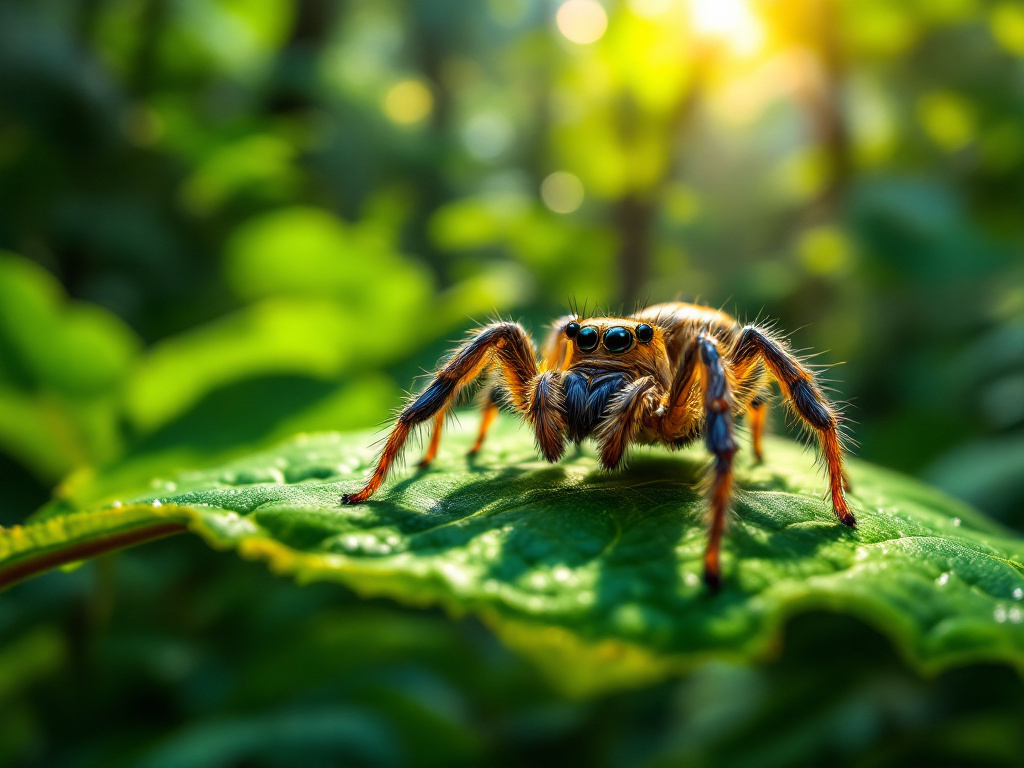
June 2026-te Meghalaya-r East Khasi Hills er Mawlyngot gram-e notun ek projonmo lynx spider species 'Hamataliwa mawlyngot' abiskar kora hoyeche. Ei species-ta Zoological Survey of India (ZSI) o University of Calcutta-r bigganider dwarai protishthito holo ebong National Academy Science Letters journal-e prakasito holo. Lynx spider-guli web banaye na, tader sharp dristite insects ke stalk kore thake. Ei abiskar Meghalaya-te 'Hamataliwa' genus er prthom barilokwa royeche, jar madhyome Indian subcontinent ebong Southeast Asia'r moddhe bigganik bhugol er gap puron holo. East Khasi Hills juda ache Indo-Burma Biodiversity Hotspot er ek ongsho, jekhane prachur prokar er biodiversity ache.
On this page
Key Facts
- Species: Hamataliwa mawlyngot, a newly discovered lynx spider species.
- Location of Discovery: Mawlyngot village, East Khasi Hills, Meghalaya, India.
- Date of Discovery: June 2026.
- Discoverers: Scientists from the Zoological Survey of India (ZSI) and the University of Calcutta.
- Publication: Findings published in National Academy Science Letters, June 2026.
- Spider Family: Oxyopidae (lynx spiders).
- Significance: First record of the genus Hamataliwa in Meghalaya.
- Habitat: Hillside shrubs including Molucca brambles.
- Biodiversity Hotspot: East Khasi Hills forms part of the Indo-Burma Biodiversity Hotspot.
Background & Context
Lynx spiders, belonging to family Oxyopidae, are active hunters that do not build webs to trap prey. Instead, they stalk insects on vegetation using sharp eyesight and quick movements. The genus Hamataliwa was previously unrecorded in Meghalaya, making this discovery significant in expanding the known distribution of the genus within India.
The discovery took place during a survey in Mawlyngot village, known for its rich natural landscape and tea gardens. Specimens (male and female) were found living on Molucca brambles along hill slopes. This extends the known geographical range of Hamataliwa species in the Indian subcontinent and bridges the distribution gap between India and Southeast Asia.
The East Khasi Hills district is located within the globally important Indo-Burma Biodiversity Hotspot, one of the richest biodiversity areas worldwide but still largely under-explored scientifically. This discovery highlights the vast undocumented biodiversity of northeastern India.
Why This Matters for Exams / Exam Relevance
This discovery has significant relevance for environment and biodiversity related topics in competitive exams such as UPSC and state civil services. Key points for exam preparation include:
- Understanding the importance of newly discovered species to biodiversity and conservation.
- Knowledge about biodiversity hotspots in India, specifically the Indo-Burma hotspot.
- Recognition of families and genera of spiders like Oxyopidae and Hamataliwa, their ecological roles as natural predators and biological pest controllers.
- Geographical distribution details emphasizing northeastern India's biodiversity and its connection with Southeast Asia.
Points to Remember
- Hamataliwa mawlyngot: new species of lynx spider discovered in 2026 in Meghalaya.
- First record of genus Hamataliwa in Meghalaya and the Northeast region.
- Lynx spiders do not build webs but actively hunt using sharp vision.
- The East Khasi Hills belong to the Indo-Burma Biodiversity Hotspot.
- Discovered by scientists from Zoological Survey of India and University of Calcutta; study published in National Academy Science Letters.
- Significance for biological pest control and ecological balance in agroforestry ecosystems.
Sources & Further Reading
| Document / Website | Link |
|---|---|
| New Lynx Spider Species Found in Meghalaya | Open New Lynx Spider Species Found in Meghalaya ↗www.gktoday.in |
| Hidden in Mawlyngot's hillsides, a spider unknown to science | Open Hidden in Mawlyngot's hillsides, a spider unknown to science ↗hubnetwork.in |
| Hamataliwa mawlyngot Latest News - Vajiram & Ravi | Open Hamataliwa mawlyngot Latest News - Vajiram & Ravi ↗vajiramandravi.com |